


New requirements for silica dust management from April 2026
Quartz dust is classified as a CMR substance. Do you have the dust control measures in place to prevent the risks?
What does this mean for your business?
As of 9 April 2026, silica dust is classified as a CMR substance (carcinogenic, mutagenic and reprotoxic). This means that employers whose workers are at risk of exposure to silica dust are obliged to work systematically and carefully to prevent and control exposure. This includes eliminating exposure, limiting dispersion and protecting staff.
What is silica dust?
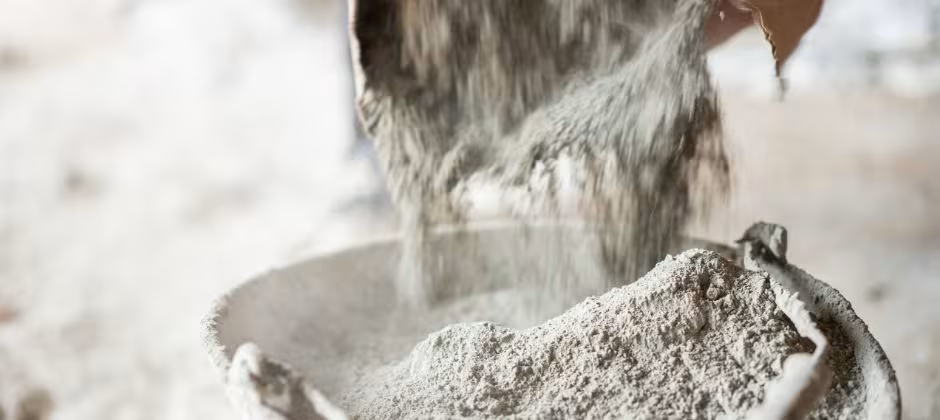
Quartz is a natural mineral composed of silica (SiO2) and are found in our most common rocks such as sandstone, granite and gneiss. When working with sand, rock and stone materials, stone dust is formed which can contain very small quartz particles. When these particles are inhaled, they can reach the bottom of the airways and eventually cause serious lung damage.

Where is silica dust found and how to prevent the risks?
Exposure to silica dust occurs in many occupations in the construction, civil engineering, industrial and manufacturing sectors. Risks arise from drilling, quarrying, sawing and grinding in stone materials, among others. To reduce the risk of inhaling silica dust, it is important to work in the right way. Examples of effective measures are:
CHOOSE METHODS AND WORK EQUIPMENT THAT REDUCE THE SPREAD OF DUST
When handling silica-containing materials, employers should choose methods and work equipment that minimise the spread of silica dust. Effective measures include water spraying the material or pre-treating it with a dust binding agent to reduce the spread of dust when the material is used.
ENCAPSULATE THE DUSTING PROCESS
Another way to avoid silica dust is to encapsulate the dusting process. The enclosure should be as tight as possible, with a negative pressure to remove the silica dust. If enclosure is not a feasible option, process ventilation with sufficient capacity may be another way to reduce the silica dust content of the air.
USE FILTERS WHEN WORKING IN CABINS
When working from a cabin, the supply air should be as dust-free as possible. Cabin air supply units should have a fine filter with at least 90 % of 0.4 micrometre (µm) particle separation. You should use fine filters in combination with a suitable basic filter, also called a pre-filter. Other filter combinations can also be used if they provide sufficient removal efficiency.
THE VENTILATION MUST HAVE SUFFICIENT CAPACITY
The ventilation in premises where dusting work is carried out must have sufficient capacity to keep the silica dust content in the air below the hygiene limit value for respirable silica in the air. Provide the work equipment used with local exhaust ventilation where the silica dust is generated, i.e. at the source of the dust. Equipment and devices must be regularly maintained in order to have the intended protective effect. For example, you should regularly check and change the fan filter.
The risk assessment of the work includes checking that the level of silica dust in the air is below the hygiene limit value. This can be done by exposure measurements or by reference measurements.
CLEANING METHODS TO REDUCE SILICA DUST TO AIR
Workplaces where silica-containing materials are handled should be kept clean using cleaning methods that minimise the spread of dust. Avoid dry sweeping as the brush swirls up the silica dust and increases the level of silica in the inhaled air. Floor scraping or vacuuming with a fine filter are better cleaning methods.
Addressing the risks of silica dust with effective dust control
Small drops are crucial
The most important factor for effective dust control is the water mist. Its function is to wet the airborne dust particles, which become heavier and fall to the ground. At the same time, the water mist moistens surfaces (material as well as the ground), which prevents dust particles from becoming airborne. The amount of water mist is adjusted to avoid water accumulation on the ground or make the material too wet.
Right droplet size
It is important that the droplets in the water mist are the right size. If the droplet is too large and moves too fast in relation to the dust particle, the dust will not be bound. A smaller droplet moves more slowly and binds the dust much more effectively. Conventional irrigation systems usually create large, heavy droplets, which means that the dust is not bound effectively.
Different types of dust require different sizes of water mist droplets to achieve optimal results. EmiControls' advanced valve technology allows the machines to create water droplets in the range of 10 to 100 µm (ideal for dust control) and the equipment can be configured according to type of dust and operating conditions.

Mobile lance
Mobile lance for dust control near the dust source. Throw length up to 20 m.
View product
Dust controllers
For effective dust control over large areas. Throw length up to 90 m.
View products
Near-source dust control
Flexible and effective systems for dust control close to the dust source. Low water consumption.
View products
System add-ons
Various options to adapt solutions to specific needs and requirements.
View productsDo you need to control silica dust levels?
The risk assessment of the work includes checking that the level of silica dust in the air is below the hygiene limit value. This can be done by exposure measurements or by reference measurements. We offer particle measurements through our partner Alnab. Contact us and we will help you, or read more below.
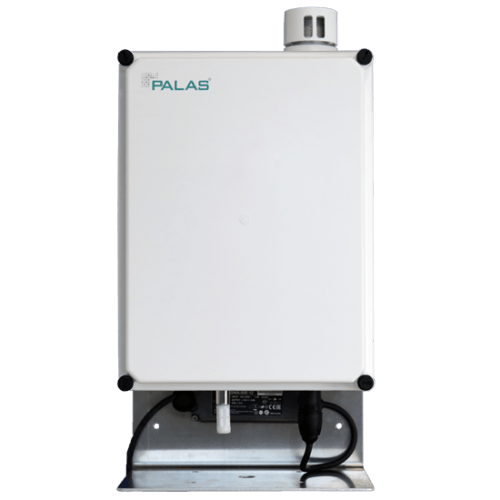
AQ Guard Smart1000 particle analyser
Air quality analyser for monitoring fine particles (PM1, PM2.5, PM4, PM10, TSP) under demanding environmental conditions.
View product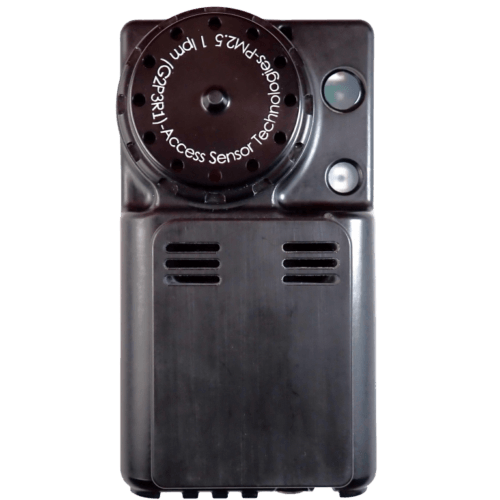
Ultrasonic Personal Air Sampler (UPAS) v2.1 PLUS
Air quality analyser for monitoring fine particles (PM1, PM2.5, PM4, PM10, TSP) under demanding environmental conditions.
View product
Particle measurement
Advanced air quality monitors and particle counters to identify and manage air pollution in different environments.
View productChoose the right product or solution for optimised dust control
Each dust problem is unique. To achieve the most effective dust control it is important to understand how different parameters affect the choice of product and type of solution.

- How does dust control with water mist work?Read the full answer
The most important factor for effective dust control is the water mist. Its function is to wet the airborne dust particles, which become heavier and fall to the ground. At the same time, the water mist moistens surfaces (material as well as the ground), which prevents dust particles from becoming airborne. The amount of water mist is adjusted is adjusted to avoid water accumulation on the ground or make the material too wet.
- Indoor or outdoor dust control?Read the full answer
Factors that need to be considered for indoor or outdoor dust control include temperature, wind and amount of water required to effectively control the dust.
- Why is optimised and effective dust control important?Read the full answer
Dust creates negative effects for employees, the company and the environment and can lead to serious consequences if dust problems are not addressed properly and in time.
- Is the dust problem at a specific point or over a larger area?Read the full answer
When choosing dust control equipment it is important to know if the dust problem area is at a specific point or over a larger area.
- Fixed installation or will the equipment be moved around on site?Read the full answer
What type of work is carried out at the site and what does it look like in the area near the actual dust source? Wind impact? Machinery, personnel and vehicles in motion? Other possible safety hazards?