


Stormwater tank cleaning
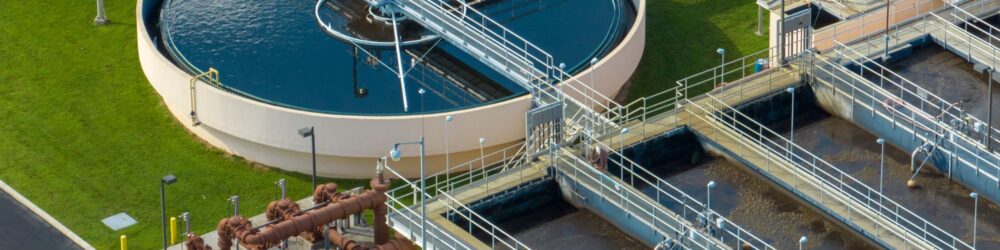
Stormwater tanks are used to manage large volumes of water during heavy rainfall. By temporarily storing excess water from the sewage system, they help reduce the load on wastewater treatment plants. Once the system has sufficient capacity again, the stored water can gradually be released back into the sewage system. This helps prevent wastewater treatment systems from becoming overloaded or overflowing during periods of heavy rainfall.
Contaminants and sediment in stormwater tanks
The water stored in stormwater tanks can contain significant amounts of both biological and non-biological contaminants. As the water may be stored for several days, considerable amounts of sediment can accumulate in the tank. The presence of biologically active contaminants can also lead to the formation of foul-smelling and potentially harmful residues as a result of bacterial activity. If these residues are not removed, they can pose health, safety and environmental risks, while also potentially affecting the tank's performance and efficiency over time.
Challenges of stormwater tank cleaning
Cleaning large stormwater tanks can be challenging. Traditional cleaning methods include manual cleaning, eductor systems and tipping buckets.
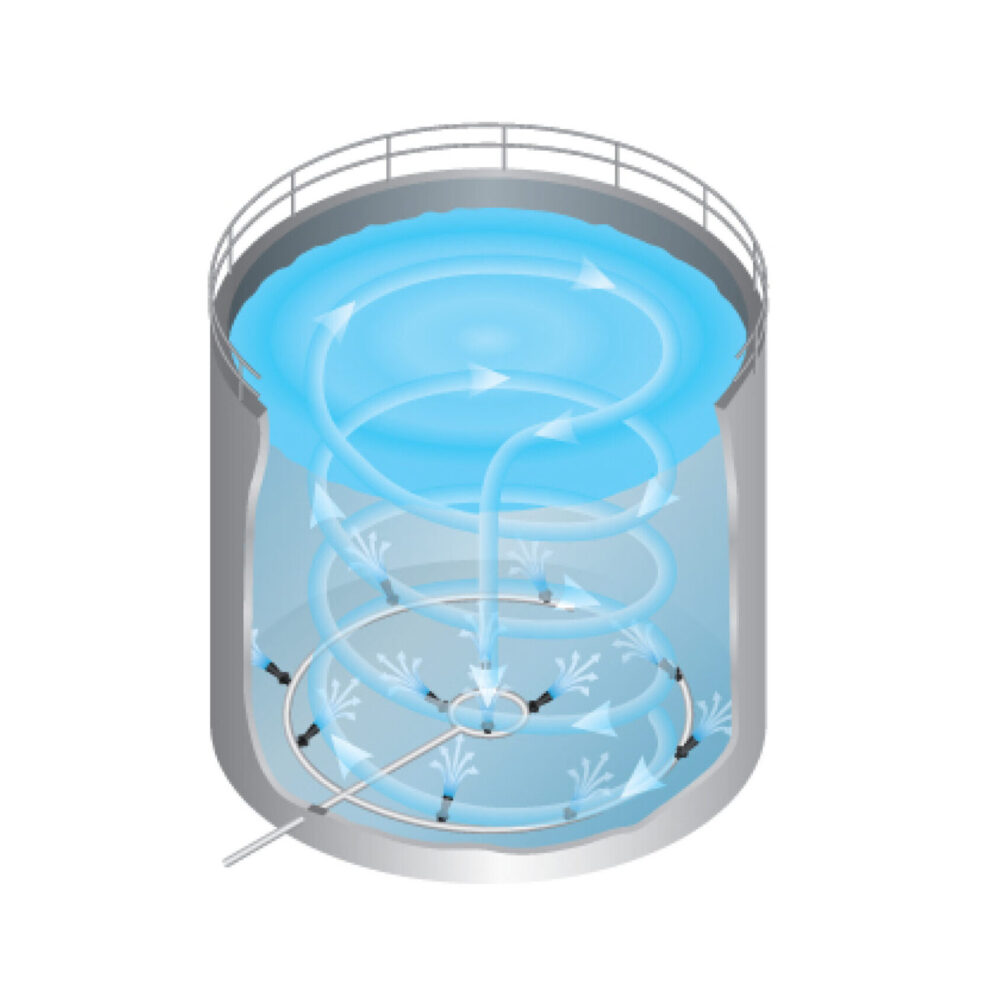
Eductor systems use a Venturi-based nozzle system to create strong water movement within the tank. The aim is to keep particles in suspension and create a vortex effect that helps loosen sediment and other residues as the tank is emptied.
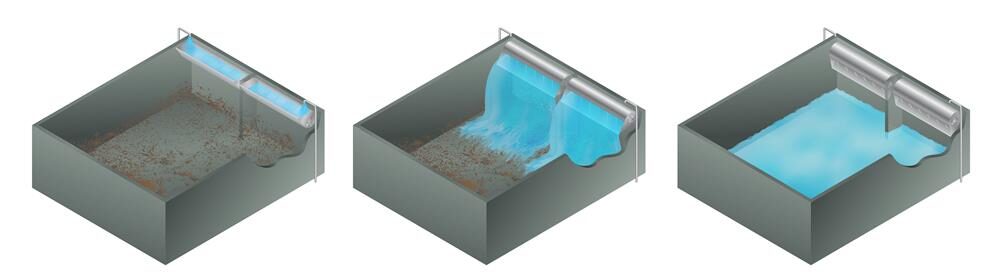
Tipping bucket systems work by collecting water in buckets that are then released with force into the tank. The resulting water movement helps loosen sediment and contaminants from the tank surfaces.
Manual cleaning is also used in some cases, but it is often both time- and labour-intensive. For large tanks, this can result in significant costs and can also present occupational health and safety challenges.
Another challenge is that traditional cleaning methods do not always provide the level of cleaning required. Sediment and residues may remain on the bottom, walls and other surfaces of the tank.
Tank cleaning machines for efficient cleaning
For more efficient and controlled cleaning, automated tank cleaning machines can be an alternative. Using rotating cleaning nozzles and high-pressure jets, the tank surfaces are systematically cleaned to remove sediment, organic material and other deposits.
The most suitable tank cleaning machine depends on several factors, including the size and geometry of the tank, the type and characteristics of the contaminants, and how the cleaning process needs to be carried out. Other factors, such as available pressure and flow, cleaning frequency and the required cleaning result, also need to be considered.


LET US GET IN TOUCH WITH YOU
Not sure where to start?
Tell us more about your application and our technical experts will help you find the right solution.
