


Compressed air products
Six steps to optimise your compressed air system
Since air compressors consume a significant amount of electricity to produce compressed air, it’s important to use that air as efficiently as possible. Below are six simple steps to help you optimize your compressed air system. By following these steps, you can reduce electricity costs, lower operating expenses, and improve overall profitability.

1. MEASURE AIR CONSUMPTION
To measure air consumption, use a flow meter that shows the volume or mass of compressed air per unit of time. Flow data helps you identify leaks, excessive air use during blow-offs, waste, and differences between various parts of the system.
To measure air consumption, use a flow meter that shows the volume or mass of compressed air per unit of time. Flow data helps you identify leaks, excessive air use during blow-offs, waste, and differences between various parts of the system.

2. FIND AND FIX LEAKS
One of the biggest causes of inefficiency in compressed air systems is leaks. According to Compressed Air and Gas Institute leaks should not exceed 5–10% of the system’s total air supply (although 0% is, of course, the ideal goal). In reality, many facilities lose more than 30% of their compressed air through leaks. Fixing these can increase your available air supply by up to 25%—without installing larger compressors.

Using an Ultrasonic Leak Detector even the smallest, inaudible leaks can be located and repaired quickly.
3. UPGRADE TO ENERGY EFFICIENT COMPONENTS
Many older blow-off, cooling, and drying processes are inefficient and consume more air than necessary. By switching to energy-efficient compressed air products such as Super Air Knives, Super Air Nozzles and Safety Air Guns you can drastically reduce your air consumption while also lowering the noise level.


4. TURN OFF COMPRESSED AIR WHEN NOT IN USE
Compressed air left running unnecessarily is a hidden energy drain. Be sure to switch off the system, or parts of it, when machines are not in operation. This can be done in two simple ways:
- manually (e.g. ball valves) or
- automatically (e.g. solenoid valves).
Ball valves are ideal when the air flow is rarely turned off, while solenoid valves are better suited for quick, frequent shut-offs.
5. USE LOCAL COMPRESSED AIR STORAGE
Compressed air receiver tanks are a key part of many systems. They store compressed air at high pressure after drying and filtration. A secondary receiver tank, placed near the point of use, acts as a capacitor-like buffer—storing energy to handle short-term peak demands. This helps maintain stable pressure, improves overall system performance, and reduces pressure fluctuations. By sizing the tank correctly, it can deliver the necessary air volume without overloading the compressor.
6. CONTROL AIR PRESSURE
Many operators use higher pressure than necessary for blow-off applications, leading to wasted energy and increased compressor load. Reduce working pressure to the minimum required to get the job done. By installing a pressure regulator at the point of use, you can achieve significant savings—in both air consumption and energy costs. Lower pressure not only reduces costs but also extends equipment life.
Want to learn more about how to optimize your compressed air system or find the right solution for your application?

Call, email or book a web meeting with one of our experts specialising in EXAIR Compressed Air Products. We will advise you on the most suitable product or solution in order to achieve an efficient and safe industrial process.
Welcome to contact us!
Explore our EXAIR compressed air products

Air knives
Efficient cleaning, drying or cooling of conveyor belts, components, etc.
View products
Static eliminators
Ion air knives, ionizing bars and guns to remove static electricity in various production processes.
View products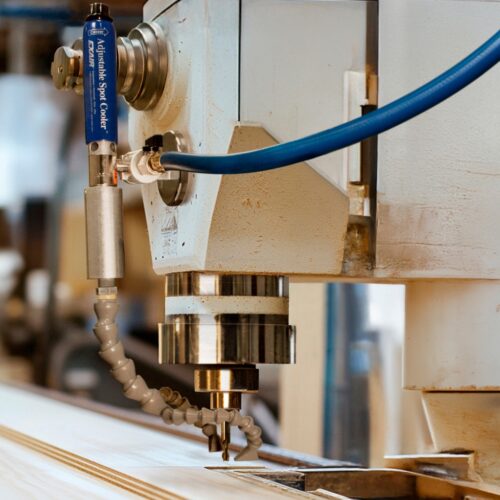
Vortex coolers and vortex tubes
Vortex coolers and vortex tubes for reliable industrial spot cooling using compressed air.
View products
Air operated conveyors
Cost-effective transportation of materials using compressed air and vacuum. No moving parts.
View products
Industrial pneumatic vacuum cleaners
Efficient cleaning of dry and wet materials in industrial environments.
View products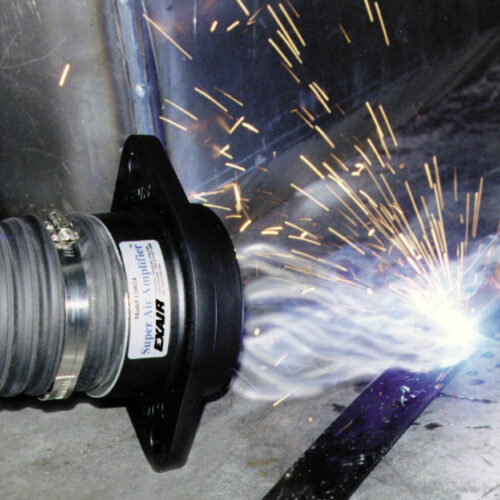
Air amplifiers
Simple, low-cost way to move air, smoke and light materials, ventilate, etc.
View products