


Nozzles & spray systems, Drip traps
What is droplet entrainment, and how can you mitigate it?
Droplet entrainment is a common yet critical issue in many industrial processes, especially those involving fluid dynamics, such as distillation, gas cooling systems, and cooling towers. Understanding droplet entrainment, how it occurs, and the strategies to mitigate it can significantly enhance the efficiency and safety of your operations.
Droplet entrainment refers to the unintentional capture and transportation of liquid droplets by a gas or vapor stream. This phenomenon typically occurs when droplets are formed within a system and are carried away by a high-velocity gas or vapor flow. The result is a transfer of liquid that can lead to contamination, inefficiency, or damage in subsequent stages of a process. Droplet entrainment can occur in various ways, depending on the process. In gas cooling systems, it might happen when droplets do not entirely evaporate and are carried downstream. In distillation columns, entrainment can result from vapor velocities that are too high, causing liquid droplets to be carried up through the column rather than settling back into the liquid phase.
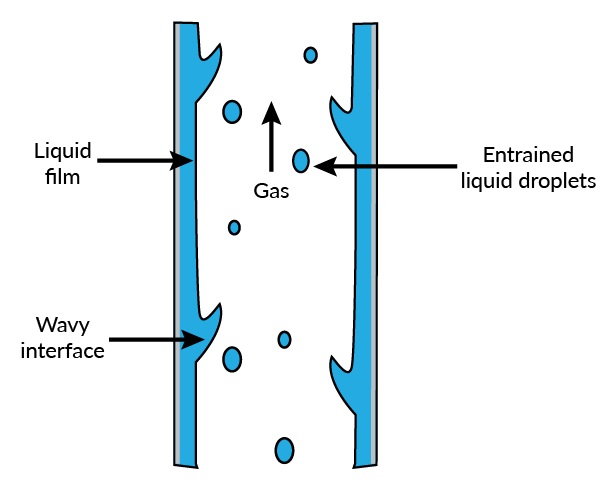
Common factors that contribute to droplet entrainment include:
- High gas velocities
Fast-moving gases can easily pick up and carry liquid droplets. - Inadequate separation
Poor design or malfunctioning of separation equipment can fail to remove droplets from the gas stream. - Increased turbulence
Turbulence in the gas flow can disrupt liquid surfaces, causing droplets to become entrained.
Why is droplet entrainment a problem?
Droplet entrainment can lead to several issues:
- Product contamination
In processes where purity is crucial, entrained droplets can carry contaminants, leading to product quality issues. - Efficiency losses
Droplet entrainment often results in lost product, reducing the overall efficiency of the process. - Equipment damage
If droplets carry corrosive or abrasive materials, they can cause damage to downstream equipment, leading to costly repairs and downtime.
Mitigating droplet entrainment
There are several strategies to minimize droplet entrainment, and the best approach often depends on the specific process and conditions:
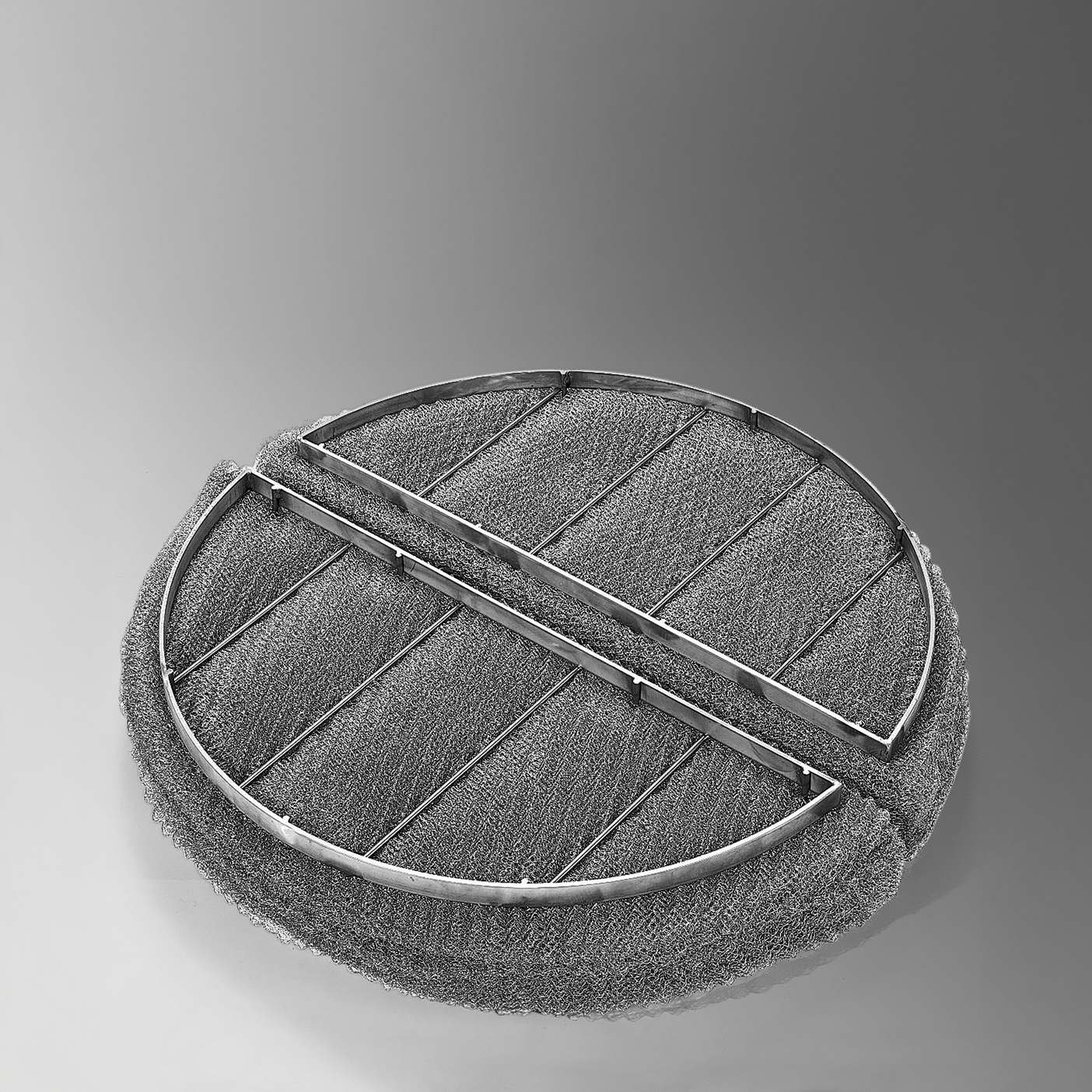
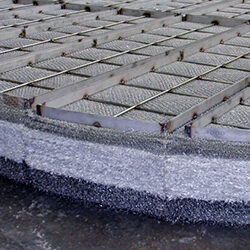
Use of demisters
Installing demisters or mist eliminators can help capture droplets before they are transported to a different part of the process.
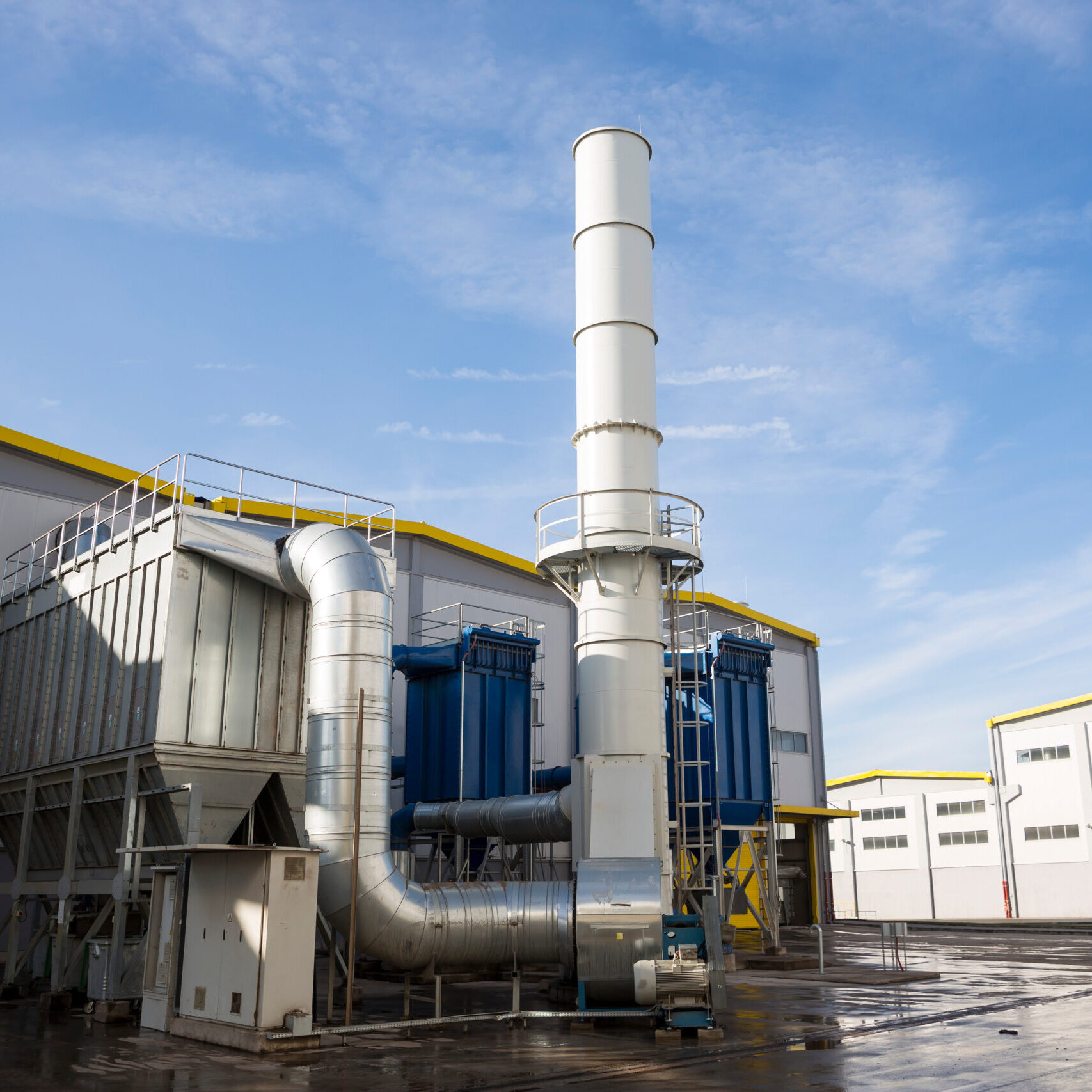
Optimize flow rates
Controlling gas velocities and drop sizes to ensure they stay within optimal ranges can reduce the risk of entrainment.
Optimize nozzle selection/parameters
Sometimes, you can reduce droplet entrainment by changing the spray nozzle for one that creates a larger droplet to overcome process gas velocities or one that produces smaller droplets to promote full evaporation.
Enhance separation techniques
Implementing advanced separation technologies, such as cyclonic separators or coalescers, can help separate droplets from gases more effectively.

Regular maintenance
Ensuring equipment is well-maintained and functioning properly can prevent conditions that lead to droplet entrainment.
Choosing the right equipment
Selecting the appropriate equipment is crucial for mitigating droplet entrainment. Factors to consider are the type of liquid and gas involved, operating conditions, and the specific process requirements. Consulting with an expert can help you choose the best solution tailored to your needs.
Related products

Coalescer
A coalescer, in combination with a demister, achieves a separation efficiency of up to 99.5% in the droplet range 2-5µm.
View product
Spray nozzles & systems
Complete range of components and solutions for an efficient and optimised spray process.
View products
Demisters
Demisters separate up to 100% of 2-5µm droplets in a gas flow.
View products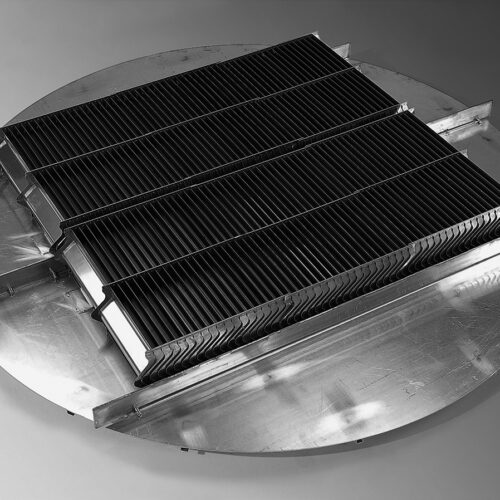
Droplet separators
Droplet separators and demisters are used to remove liquid from the gas stream, minimising the amount of liquid entrained in the gas exiting the column.
View products