

Resource library
How does spray direction affect efficiency in gas cooling applications?
In many industrial processes, such as incineration, hot gases need to be cooled before entering the next stage to protect downstream equipment. The orientation of the spray — co-current or counter-current — affects both the cooling efficiency and the total length or time required to cool the gas. The type of nozzle, residence time, and pressure are other factors that influence how effectively the gas cooling takes place.
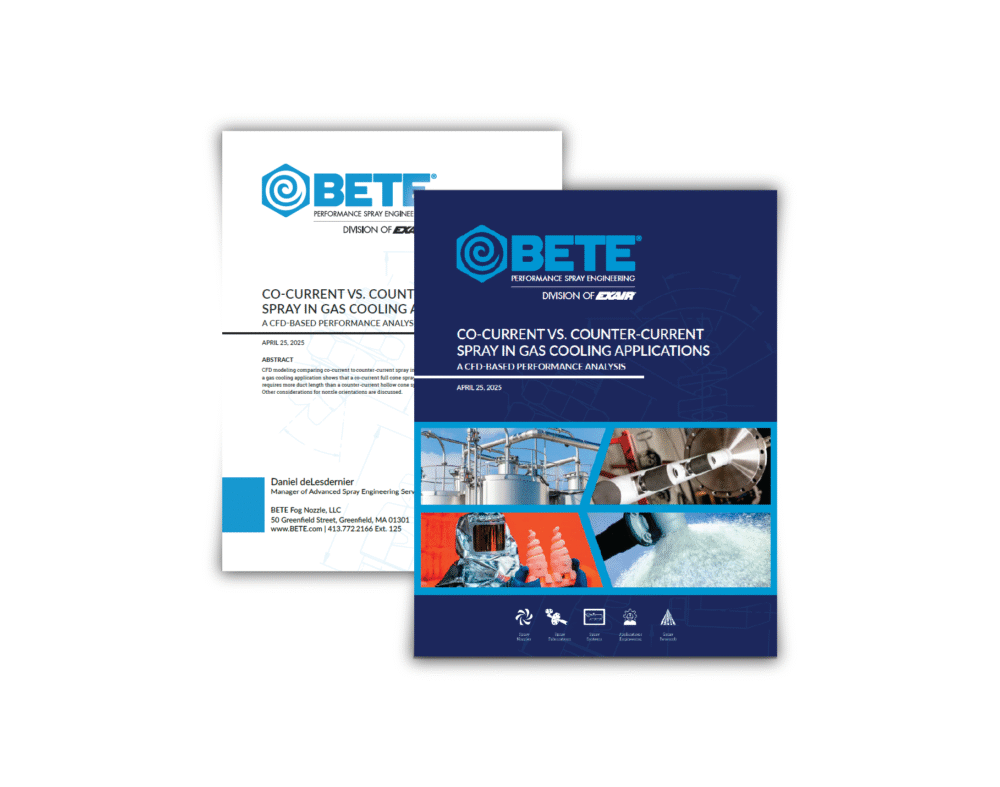
In this whitepaper you will gain insight into:
- The differences between co-current and counter-current spray orientations and how these affect the cooling efficiency of the gas.
- How nozzle type, spray pattern, and droplet size impact evaporation and the required duct length.
- Practical considerations such as clogging, pressure drop, and system design factors that affect spray performance and equipment selection.
Enter your company email address to receive the report directly in your inbox:
.